Cat in Fight Treatment: Essential Steps for Care
Cats can be territorial and may engage in fights with other felines due to various reasons such as fear, defense of territory, and competition for resources. If your cat has been in a fight, knowing how to provide appropriate cat in fight treatment is essential for their recovery and well-being. Prompt and proper care can help prevent complications, ensuring your pet heals both physically and emotionally from the traumatic experience.
Quick answer: If your cat has been involved in a fight, assess their injuries immediately and clean any wounds carefully. Monitor for signs of infection and consult a veterinarian if there are concerns or if the injuries appear serious. Long-term care and prevention strategies are also essential to minimize future conflicts.
Immediate First Aid for Cat in Fight Treatment
Assessing your cat’s injuries
The first step in treating your cat involves a thorough assessment of any visible injuries. Start by calming your cat, as their anxiety may lead to further stress and resistance. Observe your cat’s behavior, noting any signs of pain, such as hissing, growling, or attempts to hide.
Check for:
- Puncture wounds from bites, which may be small but can still be serious.
- Lacerations or cuts, which can vary in depth and length.
- Swelling or inflammation around a specific area, indicating potential issues.
- Changes in their behavior, such as a refusal to eat or lethargy, which can signal underlying pain or distress.
It’s important to differentiate between minor injuries that can be treated at home and serious ones that require veterinary attention. Minor injuries may consist of superficial scrapes or small bite wounds, while serious complications arise from deep or infected wounds.
Cleaning wounds and applying bandages
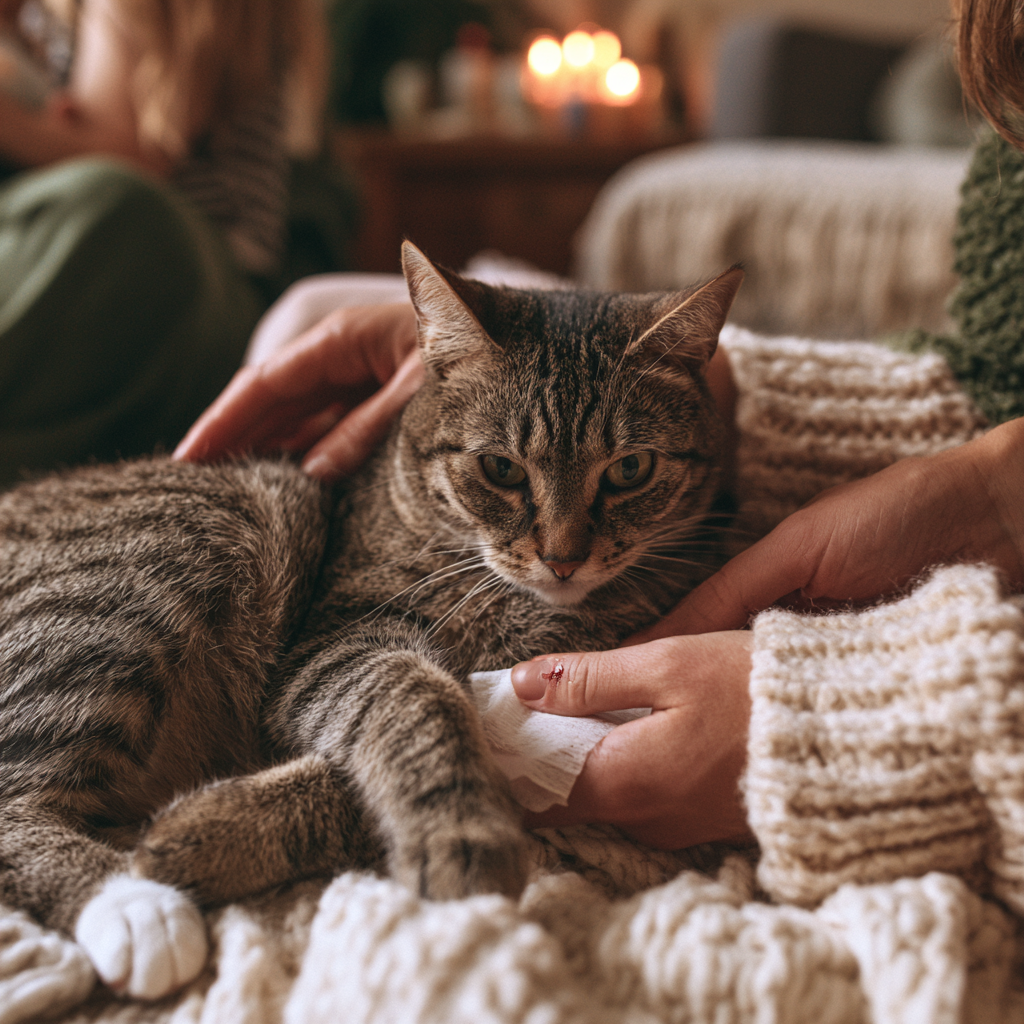
Once you’ve assessed the injuries, it’s crucial to clean them properly. Use lukewarm water and a mild soap; avoid hydrogen peroxide or alcohol, as these can irritate the wound. Follow these steps for cleaning and dressing your cat’s wounds safely:
- Gently rinse the area with water to remove dirt and debris.
- Pat the area dry with a clean towel.
- If the wound is bleeding, apply gentle pressure with a clean cloth until it stops.
- Apply a pet-safe antiseptic ointment to the wound.
- Secure a bandage over the wound using adhesive tape or vet wrap—ensure it’s snug but not too tight to restrict circulation.
To keep bandages secure and monitor the wounds without disturbing your cat too much, consider creating a soft cone collar to prevent licking. Check the bandage every day for cleanliness and adjust as needed based on your cat’s activity level.
Understanding Common Injuries from Cat Fights
Bite wounds and their complications
Bite wounds are among the most common injuries resulting from cat fights and can be deceptively minor at first glance. However, they possess a high risk for infections due to bacteria present in a cat’s mouth. This may lead to abscesses, which require veterinary intervention.
To identify complications from bite wounds, monitor for:
- Persistent swelling or redness in the surrounding area.
- Warmth or heat around the wound.
- Foul odor, which may indicate an infection.
- Fever or lethargy in your cat, suggesting systemic illness.
If any of these signs occur, seeking veterinary care is crucial to prevent further issues.
Lacerations and abrasions
Lacerations and abrasions can also occur in cat fights. These types of injuries range from superficial scrapes to deep cuts that necessitate stitches. With lacerations, similar care should be taken to clean them properly to reduce infection risk.
As with bite wounds, observe lacerations for:
- Signs of inflammation, including swelling and redness.
- Persistent bleeding that doesn’t stop after a few minutes.
- Changes in your cat’s behavior, indicating discomfort or pain.
Serious lacerations may require surgical intervention and should be evaluated by a veterinarian.
Signs of Infection After a Cat Fight
Recognizing symptoms of infection
Infections can set in easily following fight-related injuries. Symptoms include swelling, discharge, or pus at the wound site, and changes in your cat’s temperament or activity levels. Regular inspection of healing wounds can help you catch signs early.
Look for:
- Increased sensitivity around the wound area.
- Excessive licking or biting at the site, which may aggravate the problem.
- A temperature change; a fever is often a sign of an underlying infection.
- Persistent reluctance to engage in usual activities or playtime.
Prompt action can prevent a minor infection from escalating into a severe health concern.
When to consult a veterinarian
If you notice any signs of infection, as well as abnormal behaviors or worsening conditions, it is essential to consult a veterinarian. Don’t hesitate to reach out if the injuries appear severe or persist beyond a few days without improvement.
Factors that warrant a professional consultation include:
- If a wound remains open and does not show signs of healing after several days.
- If your cat exhibits signs of pain that it cannot relieve through regular means.
- Development of any unusual behavior changes.
Always err on the side of caution when it comes to your cat’s health, as prompt treatment can make all the difference.
Long-Term Care After Cat Fight Injuries
Monitoring healing and follow-up care
Once the immediate treatment is addressed, ongoing monitoring of your cat’s healing process is vital. Check the wounds daily and keep an eye on your cat’s behavior for signs of distress or changes in health.
Considerations for long-term care:
- Maintain a clean environment to promote healthy healing.
- Limit physical activity according to your veterinarian’s guidance.
- Observe for any behavioral changes that may indicate pain or discomfort.
If there are any setbacks during the healing process, reassess the injuries and consult your veterinarian if necessary.
Importance of keeping your cat indoors
To provide the best long-term care, consider keeping your cat indoors while they heal fully from any injuries sustained in a fight. This helps protect not only their physical well-being but their psychological state as well, as the stress of potential interactions with other cats can be significant.
Indoor living:
- Reduces the risk of further injuries and infections caused by outdoor encounters.
- Allows for a calmer environment where your cat can recuperate.
- Promotes bonding through interactive play, which can improve emotional support during recovery.
Keeping your cat indoors temporarily can aid their healing and help them feel secure during this transition.
Prevention Strategies for Cat Fights
Creating safe spaces for your cat
Preventing future cat fights begins by creating a safe and enriching environment for your pet. Provide areas where your cat can retreat, offering them a safe space away from potential confrontations with others.
Consider including:
- Vertical space such as cat trees or shelving for climbing and observing.
- Separate feeding and litter areas to reduce territorial disputes.
- Safe hiding spots, such as cardboard boxes or condos, where they can escape if feeling threatened.
These strategies enable your cat to navigate their environment with lower risk of conflict and promote comfort in their home.
Socializing your cat to avoid conflicts
Proper socialization is crucial for reducing aggression in cats. Gradual introductions to new environments or fellow pets can help alleviate anxieties surrounding other animals. When introducing a new cat, observe your pet’s reactions and progress slowly.
Steps for successful introductions include:
- Keeping initial meetings short and controlled, ensuring both cats can retreat if necessary.
- Monitoring their body language; look for signs of readiness, such as relaxed postures and playful behavior.
- Rewarding positive interactions with treats and praise to reinforce good behavior.
A gradual approach can help your cat feel more secure and reduce the chances of future fights.
Frequently Asked Questions
What should I do if my cat gets in a fight?
First, assess your cat’s injuries and provide first aid if necessary, including cleaning and bandaging visible wounds. Monitor their behavior and health closely, and seek veterinary advice if any significant injuries or signs of infection are observed.
How can I tell if a cat’s injury is serious?
Serious injuries can be indicated by excessive bleeding, deep puncture wounds, significant swelling, or if the cat exhibits signs of pain, such as vocalization, hiding, or reluctance to move. If any of these symptoms are present, it’s essential to consult with a veterinarian promptly.
Is it safe to treat cat fight wounds at home?
Minor wounds can often be treated at home with cleaning and bandaging, but it’s essential to monitor for signs of infection. For serious wounds, deep lacerations, or bites, a veterinarian’s assessment is usually necessary to prevent complications.
When should I take my cat to the vet after a fight?
You should take your cat to the vet if they exhibit significant symptoms like deep or bleeding wounds, signs of infection, behavioral changes, or if they do not seem to be healing appropriately. Timely vet intervention can prevent further health issues.
What types of injuries do cats sustain in fights?
Cats commonly sustain bite wounds, lacerations, and abrasions following fights. Each type of injury may have varying degrees of severity and potential for complications, such as infection or abscess formation, necessitating careful monitoring and treatment.