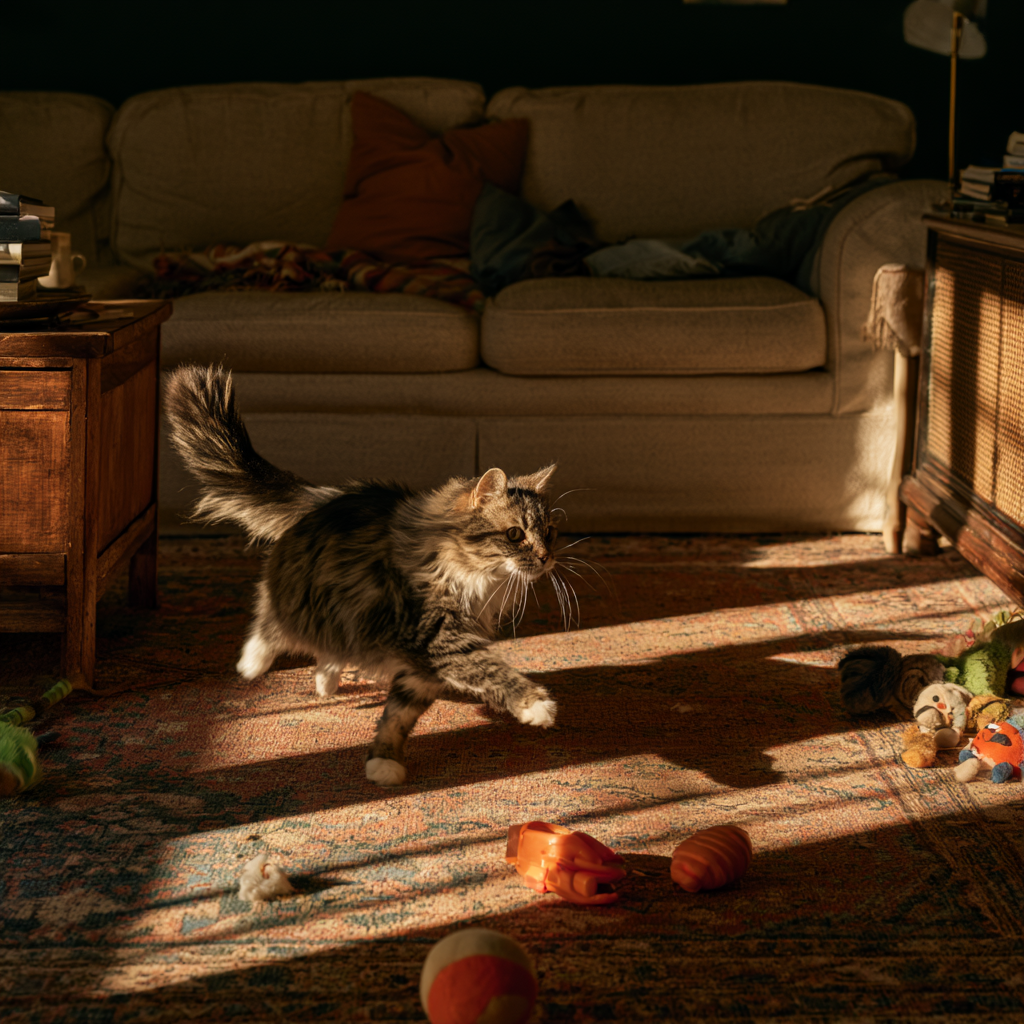
Why Do Cats Zoom Around at Night? Understanding Feline Behavior
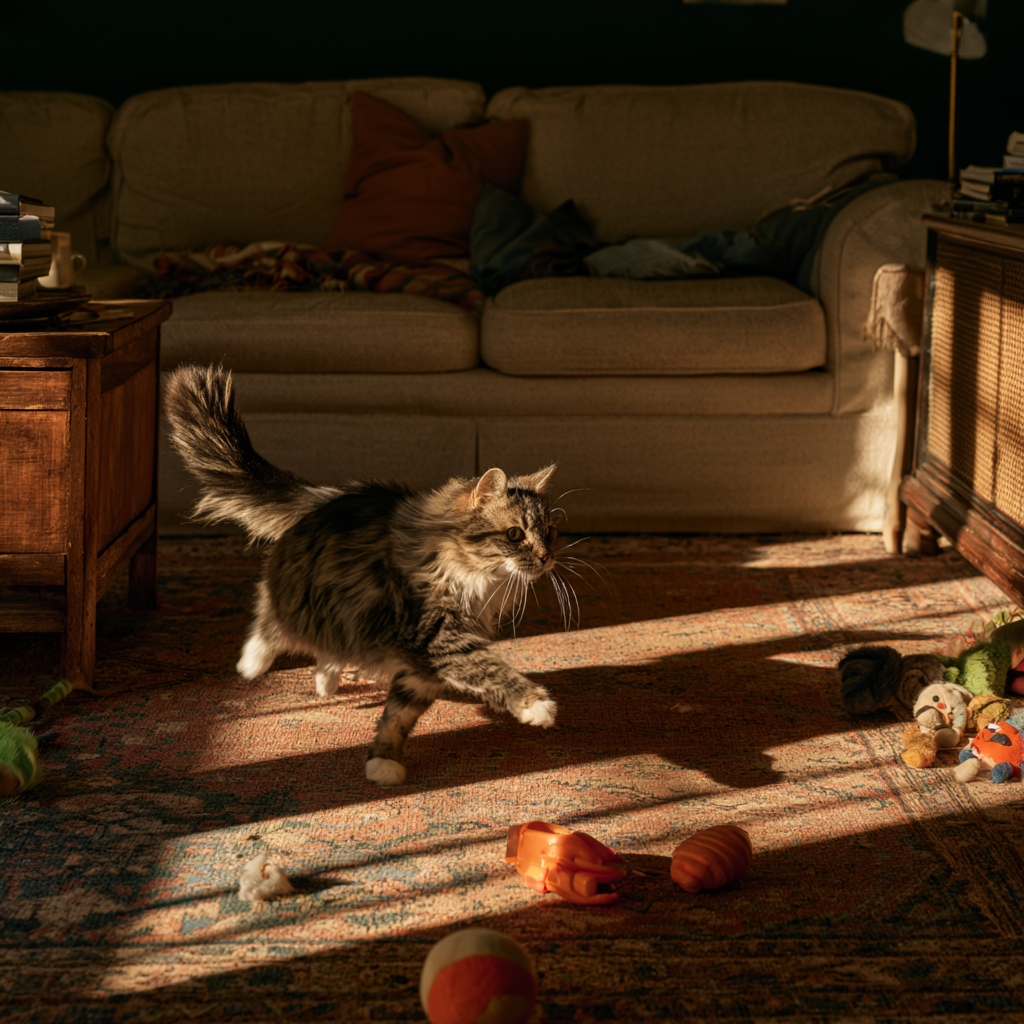
Why Do Cats Zoom Around at Night? It’s a question many cat owners ask after experiencing their feline companions bursting with energy during the late hours. This behavior is often perplexing, as it seems like a delightful, albeit chaotic, display of evening antics. However, understanding the deeper reasons behind this nocturnal activity can enhance not only your knowledge of cat behavior but also your relationship with your beloved pet.
Quick answer: Cats zoom around at night primarily due to their natural instincts, which drive them to be more active during twilight hours. Hunting behaviors, coupled with the influences of their daytime experiences and breed traits, contribute significantly to this behavior.
Why Do Cats Zoom Around at Night?
Natural instincts of cats that lead to nighttime activity
Cats are natural hunters, and much of their behavior is rooted in their ancestral instincts. In the wild, cats are crepuscular creatures, meaning they are most active during the dawn and dusk hours. This evolutionary trait helps them maximize hunting success by taking advantage of the low light conditions when their prey is also active but more vulnerable. Even though domestic cats are kept indoors and their hunting is often curtailed, these instincts remain deeply ingrained.
Additionally, this innate behavior can manifest as bursts of energy, commonly referred to as the “zoomies.” These playful sprints are not only fun for the cat but also serve a purpose, allowing them to engage in behaviors meant to mimic hunting, such as chasing, pouncing, and leaping. Such activities help to fulfill their psychological need for stimulation and exercise, which is particularly important in a home environment.
The role of hunting behaviors in domestic cats
Hunting behaviors significantly influence why cats zoom around at night. While they may no longer need to hunt for survival, the urge to simulate these behaviors remains. Indoor cats might express this energy through playful antics, often targeting their unsuspecting owners or imaginary prey.
You might observe your cat stalking a stray piece of dust or playfully pouncing on a toy mouse as a way to channel this innate hunting drive. These behaviors are not merely playful; they represent a complex interplay of instinct and learned behaviors. Besides, nighttime offers fewer distractions for cats and allows them to engage more fully with their environment, leading to increased activity levels during the evening hours.
Factors Influencing Nighttime Activity in Cats
The impact of daytime stimulation on their energy levels
Daytime activities and the level of stimulation your cat experiences play significant roles in their nighttime energy levels. If a cat has limited interaction and playtime during the day, it may build up excess energy that often releases during the night when their owners are settling in for rest. For instance, a cat left alone for long periods may become hyperactive when evening comes, seeking methods to expend pent-up energy.
To create a balanced routine, consider incorporating interactive play at intervals throughout the day. Activities that focus on engaging their physical and mental faculties, such as puzzle boxes with treats or feather wands, can help reduce their nocturnal sprinting. Equally important is establishing a set playtime routine to ensure your cat is sufficiently worn out before bedtime.
Differences in nocturnal behavior across cat breeds
Breed can also influence how active a cat is at night. Various breeds exhibit differing levels of nocturnal activity. For example:
| Breed | Typical Nocturnal Behavior | Activity Level |
|---|---|---|
| Siamese | Inquisitive and vocal; may engage in extensive play | High |
| Maine Coon | Moderately playful; more relaxed overall | Moderate |
| Persian | Laid-back; more likely to snooze than zoom | Low |
Understanding these variations can help cat owners manage their expectations regarding nighttime activity. A high-energy breed like the Bengal may require more engagement and stimulation throughout the day compared to a calm breed like the British Shorthair. Tailoring your approach based on breed characteristics can lead to more harmonious interactions, especially during the nighttime hours.
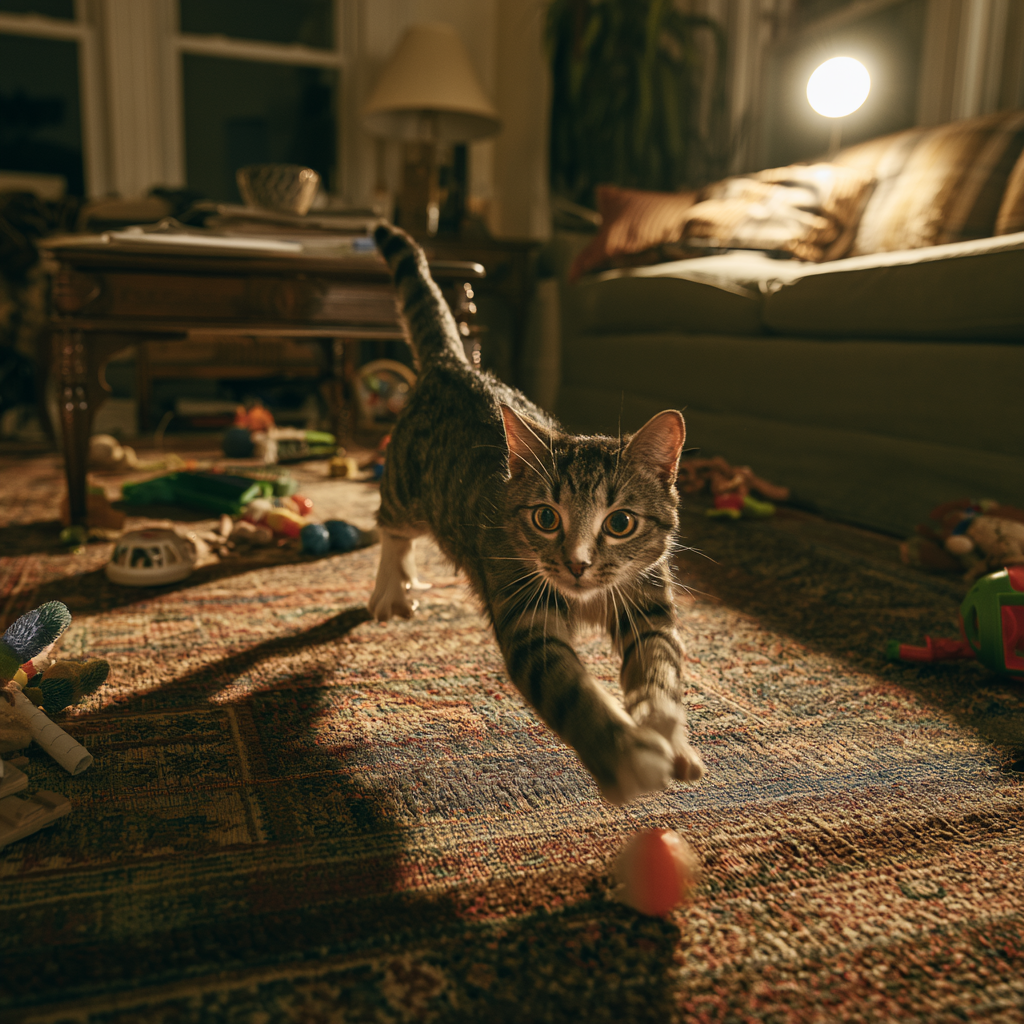
Managing Your Cat’s Nighttime Energy
Activities and toys to engage your cat during the day
To manage your cat’s nighttime energy levels effectively, engaging them with stimulating activities during the day is crucial. Consider integrating the following toys and activities into your cat’s routine:
- Interactive toys: Toys that move or have unpredictable movements tend to attract a cat’s attention, encouraging them to chase and pounce.
- Laser pointers: These can be excellent for encouraging your cat to run and play, but it’s essential to avoid pointing the laser directly at their eyes.
- Feather wands: These allow you to engage and interact playfully, simulating hunting behaviors, which can help expend energy effectively.
- Puzzle feeders: Filling these with treats can mentally stimulate your cat and provide a sense of accomplishment when they successfully extract food.
By incorporating various toys and daily routines that encourage engagement, you can help prevent restless nights caused by excess energy. Remember to observe your cat’s responses and preferences, as some may prefer chase games, while others enjoy quiet, problem-solving challenges.
Creating a nighttime routine to reduce hyperactivity
Cats thrive on routine, and establishing a calming nighttime ritual can help mitigate hyperactivity. Consider implementing the following practices:
- Conduct a play session about an hour before your own bedtime to help deplete their energy.
- Follow up play with relaxing activities such as grooming, which can be soothing.
- Dim the lights and reduce noise in the house to signal the transition to nighttime.
- Provide a cozy and safe resting space where your cat feels secure, perhaps with a favorite blanket or bed.
After establishing a routine, stick with it consistently, giving your cat’s body time to adjust. Through these nighttime rituals, you can foster a sense of calmness that minimizes the likelihood of hyperactive zoomies as you wind down your day.
Understanding Your Cat’s Overall Health
Recognizing the signs of health issues related to hyperactivity
While occasional nighttime zooming is typically harmless, it may also signal underlying health issues, particularly if hyperactivity becomes excessive or is accompanied by other concerning behaviors. Signs to watch for include:
- Increased aggression or anxiety levels during play.
- Changes in appetite or unusual drinking patterns.
- Excessive vocalization or restlessness beyond typical nocturnal activity.
- Substantial changes in weight, either loss or gain.
These symptoms may indicate that hyperactivity is related to stress, anxiety, or other health problems. It’s essential to consider the context of these behaviors and monitor your cat closely.
When to consult a veterinarian about your cat’s behavior
If you notice significant changes in your cat’s behavior, especially patterns of hyperactivity that seem out of the ordinary, it’s prudent to consult a veterinarian. This is particularly important if the behaviors are accompanied by concerning signs. A veterinarian can help rule out potential health issues and may provide recommendations for managing your cat’s activity levels more effectively.
In summary, understanding why your cat exhibits nighttime zooming behavior involves considering several factors, from their natural instincts to daily activities and breed differences. By fostering an engaging environment and establishing routines, we can help our feline companions find a balanced approach to their nocturnal nature.
Frequently Asked Questions
What causes zoomies in cats?
Zoomies in cats are primarily caused by their natural instincts as crepuscular hunters and can be influenced by factors such as daytime stimulation and breed characteristics.
Are night activities normal for cats?
Yes, night activities are normal for cats due to their crepuscular nature. They often exhibit increased energy levels during dawn and dusk, reflecting their instinctual hunting behaviors.
How can I calm my cat down at night?
To calm your cat at night, ensure they receive adequate physical and mental stimulation during the day, and establish a calming nighttime routine to help them wind down.
Do older cats zoom around like younger ones?
While older cats may exhibit occasional bursts of energy, they typically do not zoom around as frequently as younger, more active cats. Each cat’s activity level can vary based on health, temperament, and breed.
Is it safe to let my cat roam at night?
While most cats enjoy exploring at night, ensuring their safety is crucial. Supervision is recommended to protect them from potential dangers, such as traffic or encounters with wild animals.