Why Does My Cat Purr and Bite Me? Understanding Your Cat’s Behavior
Why Does My Cat Purr and Bite Me? This common question reflects the complexity of feline behavior, blending both affection and potential discomfort in our pets. Understanding the dual signals of purring and biting can help unravel the mystery behind these seemingly contradictory actions, and it ultimately leads to a deeper connection with your cat. Throughout this article, we will explore the nuances of this behavior, equipping you with insights and strategies to improve interactions with your feline companion.
Quick answer: Cats may purr while biting as a way of expressing mixed emotions. Purring often signifies contentment, but it can also indicate discomfort or overstimulation. Understanding your cat’s unique context and behavior is crucial to addressing this duality.
Why Does My Cat Purr and Bite Me?
Exploring the dual nature of purring
Purring is often associated with feelings of contentment, particularly when your cat is cozy on your lap or engaged in gentle petting. However, purring can also manifest in moments of stress or discomfort. It’s essential to consider the context of this sound along with accompanying body language. For instance, a relaxed cat will display soft body posture, kneading with paws, and perhaps half-closed eyes. In contrast, a cat who purrs but simultaneously exhibits a tense body, dilated pupils, or an arched back might be expressing distress or annoyance, even while making this soothing sound.
This duality showcases how vital it is to interpret signals collectively rather than in isolation. A cat may start off purring with affection, but if overstimulated—perhaps from excessive petting or a loud noise—its demeanor can switch, leading to a sudden bite.
When purring indicates distress or discomfort
Identifying when purring transitions from a sign of pleasure to a signal of distress is crucial for cat owners. Look for specific signs that may indicate your cat is uncomfortable despite its purring. Signs of distress can include:
- Tail swishing or twitching
- Ears positioned back against the head
- Wide or dilated eyes
- Panting or rapid breathing
If you notice these behaviors while your cat is purring, it is advisable to give them space. Creating a more calming environment can help your cat feel secure; consider adding hiding spots with covered beds or safe retreats where the cat can escape feelings of anxiety. Gentle handling and gradual desensitization to stressful stimuli can also help alleviate discomfort.
Understanding Cat Affection and Aggression
Identifying signs of affection in your cat
Identifying when your cat is showing affection can transform your relationship. Signs of a content and affectionate cat include:
- Gentle headbutting against you
- Purring while being petted softly
- Kneading with paws
- Slow blinking while making eye contact
These actions indicate that your cat aims to bond with you and feels safe in your presence. Noticing these signals can help you differentiate between affectionate moments and those indicating discomfort, allowing you to respond appropriately.
Recognizing aggressive play and its triggers
Play behavior in cats can easily escalate into aggressive actions, including biting or scratching. Understanding what triggers these aggressive play sessions is key to managing them. Common triggers may include:
- Overstimulation from petting
- Excited behavior during a play session
- Hunting instincts being provoked (especially with small toys)
To redirect aggressive play, consider providing dedicated playtime with toys designed for interaction, such as feather wands or laser pointers. If your cat becomes overly aggressive, halting the play session and providing some chill-out time can help them calm down.
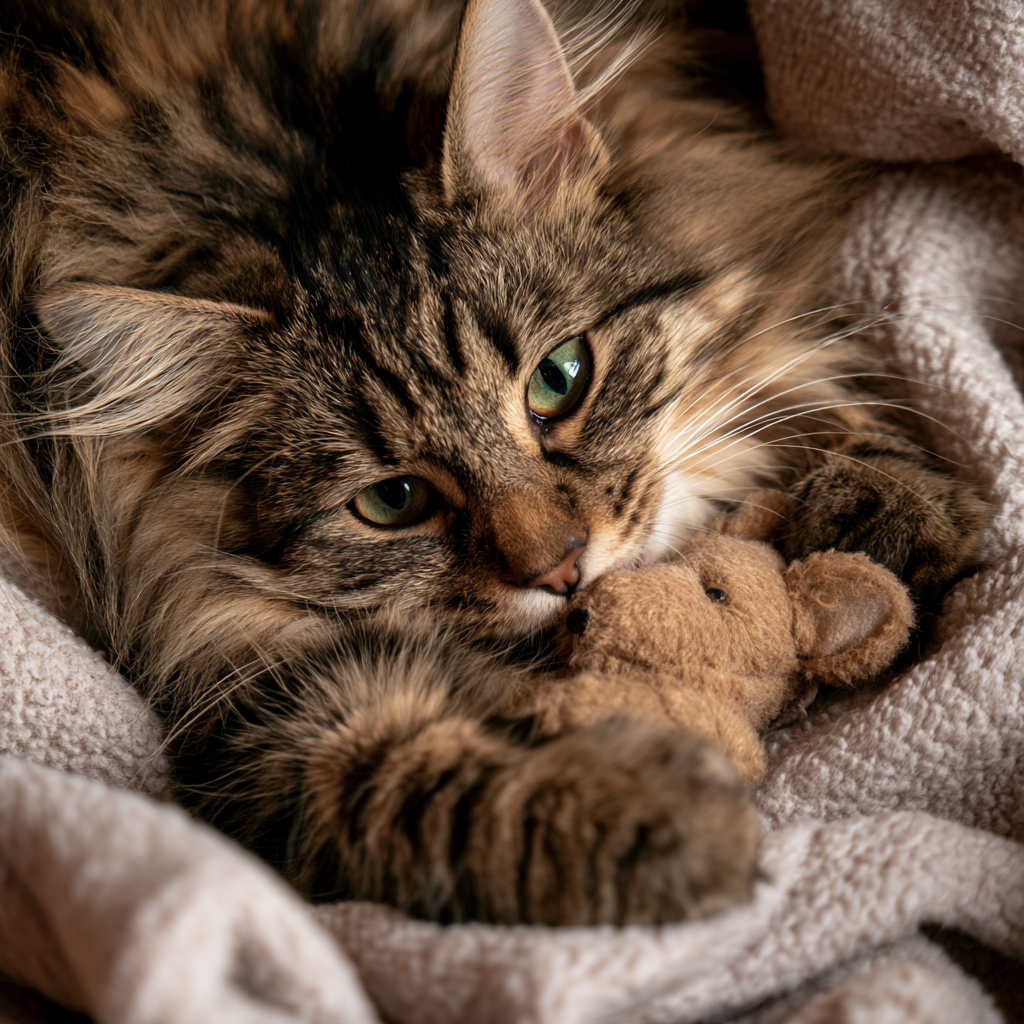
Behavioral Contexts of Purring and Biting
How your cat’s mood affects behavior
A cat’s mood significantly influences its behavior, particularly regarding purring and biting. Factors such as environmental changes, recent experiences, and overall health status can distinctly shape how a cat expresses itself. For example, a cat who feels secure in its environment might greet your return from a day out with gentle purring and affectionate rubbing, whereas a cat that has experienced stress, such as punishment or isolation, may react defensively or exhibit unpredictable biting behavior when approached.
Paying close attention to your cat’s mood and adjusting your approach based on these cues can lead to a more harmonious relationship. If you sense unease, giving your cat some space to recalibrate can be beneficial. Familiarizing yourself with their daily routines and preferences will also contribute to a stronger bond.
Situations that may lead to unexpected biting
Unexpected biting can leave you puzzled and perhaps even concerned. Various situations can lead to instances of a seemingly relaxed cat suddenly biting. Some common scenarios include:
- Being touched in sensitive areas (e.g., belly, tail, or paws)
- Overexcitement during play when energy levels surge
- An abrupt shift in the environment, such as loud noises or unfamiliar visitors
Being aware of these triggering events helps in recognizing when to intervene. Observing your cat’s body language for signs of discomfort before the biting occurs can help prevent these situations. Redirecting attention or behavior before reaching that threshold is key.
Managing Your Cat’s Behavior
Strategies for reducing biting during play
Managing biting during play effectively requires a strategy focused on understanding and redirecting behavior. Some techniques you might consider include:
- Use toys as a barrier: Always engage in play using toys to keep your hands at a safe distance.
- Pause play and redirect: If biting occurs, immediately stop the interaction and redirect their energy toward a toy.
- Engage in interactive play: Use laser pointers or wand toys to allow your cat to simulate hunting without physical contact.
- Reward calm behavior: Provide treats or affection for gentle play and calmness, reinforcing desirable behavior.
Implementing these strategies with consistency can help promote more appropriate play behavior, leading to healthier interactions between you and your cat.
When to seek professional help for behavioral issues
If your efforts to manage biting and other undesired behaviors aren’t yielding results, it may be appropriate to consult a professional. Signs that indicate it’s time to seek help include:
- Frequent aggression that escalates into destructive behaviors
- Ongoing stress behaviors such as excessive hiding, vocalizing, or litter box avoidance
- New behaviors that arise suddenly, indicating possible underlying health issues
Behavioral specialists or veterinarians can provide insight into potential triggers and implement tailored strategies, ensuring your cat’s needs are met while preserving a harmonious home environment.
Frequently Asked Questions
Why does my cat purr when she’s about to bite?
Cats may purr right before they bite as a response to overstimulation, feeling conflicted between affection and irritation. The purring serves as a sign of both enjoyment and a warning that they may want to disengage or feel overwhelmed.
Is purring a sign of happiness in cats?
While purring is commonly interpreted as a sign of happiness, it can represent various emotions depending on the context. Observing accompanying body language is vital to fully understand a cat’s emotional state.
How can I tell if my cat is being affectionate or aggressive?
Affectionate behavior often includes slow blinking, head rubbing, and gentle purring, while aggression can be signaled by a tensed body, flattened ears, and abrupt movements. Noting your cat’s overall body language and the context of interactions can aid in distinguishing between the two.
What should I do if my cat bites me while purring?
If your cat bites while purring, cease interaction immediately to prevent reinforcing this behavior. Give your cat space to calm down and avoid using your hands as playthings to reduce future occurrences.
Can a cat purr and still be in pain?
Yes, a cat can purr while in pain; this behavior is sometimes used for self-soothing during stressful or painful situations. Observing other signs of discomfort or distress alongside the purring is essential for assessing the situation accurately.