How to Stop a Cat From Scratching Furniture: Effective Strategies
How to Stop a Cat From Scratching Furniture is a common challenge for many pet owners. Cats have a natural instinct to scratch, and this behavior can lead to unwanted damage in your home. Understanding the reasons behind this instinct and how to address it can help you create a harmonious environment for both you and your feline friend. In this article, we’ll explore effective strategies to curb this behavior while ensuring your cat’s needs are met.
Quick answer: To stop a cat from scratching furniture, provide appropriate scratching posts, use positive reinforcement to encourage their use, and implement safe deterrents. Additionally, making environmental changes can help discourage the behavior while maintaining your cat’s natural instincts.
Understanding Why Cats Scratch Furniture
Reasons for scratching beyond play
Scratching is a fundamental behavior for cats that serves multiple purposes. While it may appear to be merely a playful activity, there are deeper motivations behind this instinct. Here are some key reasons why cats scratch furniture:
- Marking territory: Cats have scent glands in their paws, and scratching helps them deposit their scent on surfaces to establish their territory.
- Sharpening claws: Scratching allows cats to shed old claw sheaths, keeping their claws sharp and healthy.
- Stretching: The act of scratching helps cats stretch their muscles and keep their body flexible, which is vital for their overall physical well-being.
- Relieving stress: Scratching can serve as a coping mechanism for cats facing anxiety or stress, offering them an outlet for pent-up energy or frustration.
Signs of stress or anxiety in scratching behavior
While scratching is a normal cat behavior, an increase in frequency or intensity may signal underlying stress or anxiety. It’s essential to recognize these signs to address your cat’s emotional needs effectively. Look for the following indicators:
- Excessive scratching: If your cat scratches furniture more than usual, this may be a response to stress.
- Vocalization: Increased meowing or yowling while scratching might suggest discomfort or unease.
- Body language: Watch for signs of distress such as flattened ears, twitching tails, or dilated pupils.
- Changes in behavior: Withdrawal, reduced playfulness, or over-grooming may indicate anxiety that could manifest in scratching.
How to Stop a Cat From Scratching Furniture
Choosing the right scratching post
Selecting an appropriate scratching post is vital in redirecting your cat’s natural behaviors away from your furniture. Consider these factors when choosing a scratching post:
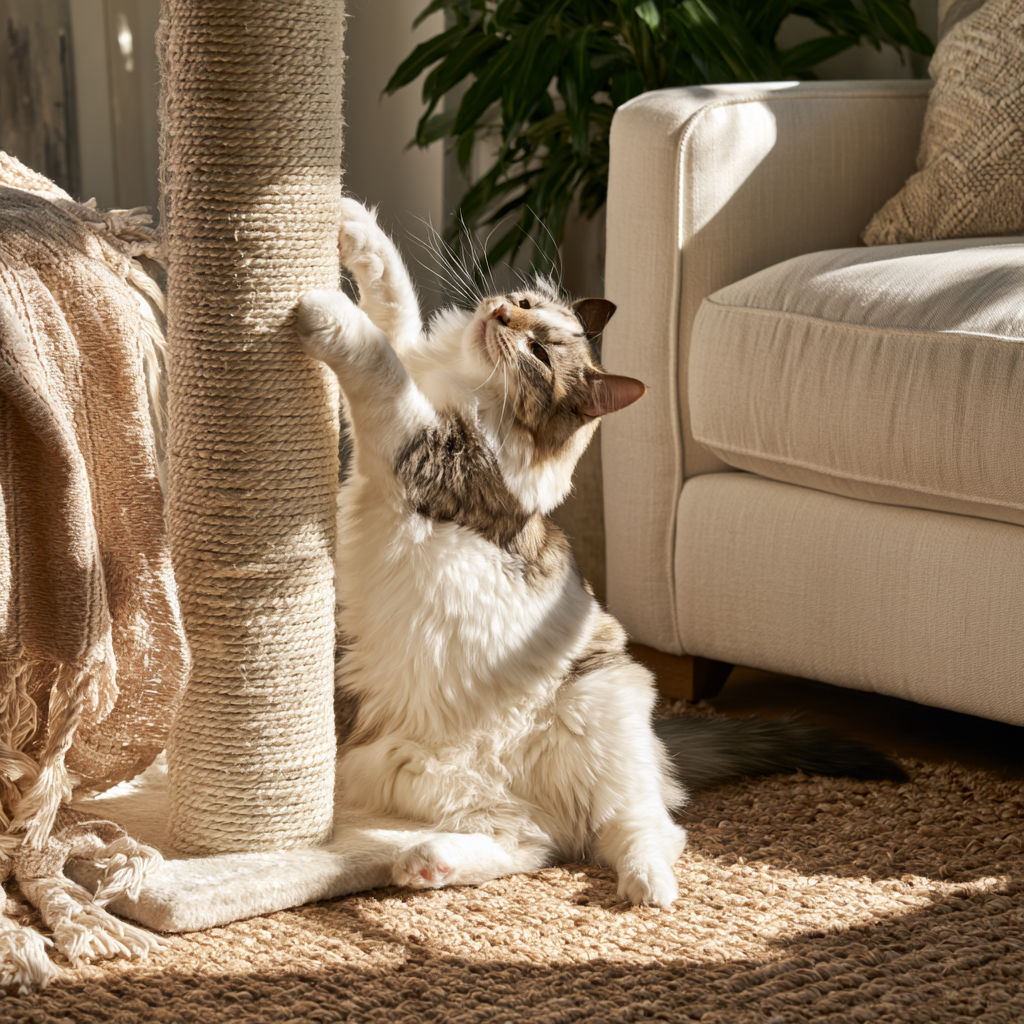
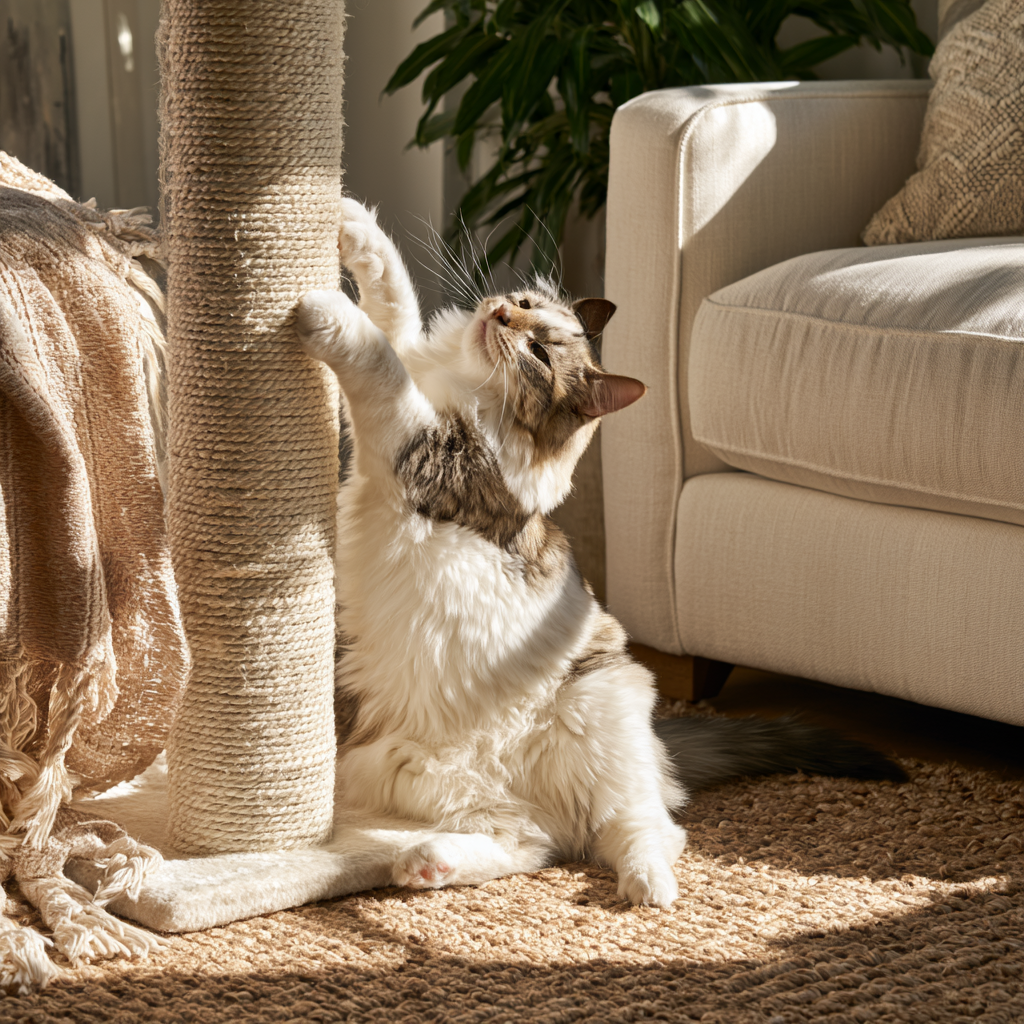
- Height and stability: Ensure the scratching post is tall enough for your cat to stretch fully and sturdy enough to prevent tipping.
- Surface material: Different cats prefer different textures; sisal, cardboard, and carpet are popular options. Observe your cat’s preferences to find the best fit.
- Design and placement: Place scratching posts near areas your cat frequently scratches, and experiment with various designs, such as vertical, horizontal, or angled posts.
Training your cat with positive reinforcement
Positive reinforcement is a powerful training method that helps establish desirable behaviors in our pets. To encourage your cat to use the scratching post instead of furniture, follow these steps:
- Provide immediate rewards when your cat uses the scratching post. Use treats, verbal praise, or petting as reinforcement.
- Redirect your cat from scratching furniture by gently guiding them to the post. Avoid punishment, as this may create fear.
- Maintain consistency in your approach by reinforcing the desired behavior every time it occurs to build a habit.
Using safe deterrents around furniture
In addition to providing suitable scratching options, employing deterrents can help protect your furniture while keeping your cat engaged. Consider these safe deterrents:
- Sticky tape: Cats dislike the feeling of sticky surfaces. Applying double-sided tape to areas they scratch can discourage the behavior.
- Commercial sprays: There are various cat-safe sprays that emit scents or tastes unappealing to cats, making furniture less appealing.
- Furniture covers: Protect your furniture with slipcovers or specific furniture wraps designed to make scratching less effective.
Making environmental changes to discourage scratching
Your home environment plays a significant role in your cat’s behavior. Implementing the following changes can help reduce the chances of furniture scratching:
- Declutter scratching areas: Limit the number of items within reach of your cat to reduce temptation.
- Enhance stimulation: Provide interactive toys and engage in regular play to satisfy your cat’s need for stimulation.
- Multiple scratching options: Offer various scratching posts in different locations to accommodate your cat’s preferences and territory.
Maintaining Healthy Scratching Habits
Balancing needs for scratching and furniture preservation
It is crucial to find a balance between allowing your cat to engage in scratching behavior and keeping your furniture intact. Here are a few strategies:
- Rotate scratching posts: Change the locations and types of scratching posts periodically to keep your cat interested.
- Trim claws regularly: Regular nail trimming can minimize damage. If you’re uncertain about how to do this, consult with a veterinarian or a professional groomer.
- Provide alternative surfaces: Integrate acceptable scratching surfaces like corrugated cardboard or scratching pads throughout your home.
Continuous assessment and adjustment of techniques
As your cat ages or as circumstances change in your home (such as moving or introducing new pets), regularly assess the effectiveness of your scratching deterrents and techniques. Your cat may respond differently over time, requiring adjustments in strategy. Here are some ways to maintain an effective plan:
- Observe changes: Watch how your cat’s scratching behavior evolves and be prepared to adapt your approach based on their evolving needs.
- Consult professionals: If you’re struggling to manage your cat’s scratching habits despite your efforts, don’t hesitate to consult a veterinarian or an animal behaviorist for tailored advice.
- Encourage feedback: Engage with other pet owners in online communities or forums to exchange tips that have worked for others.
In summary, addressing the issue of how to stop a cat from scratching furniture requires an understanding of their instincts and a thoughtful approach to training and environmental management. By providing appropriate alternatives, using positive reinforcement, and creating a space that meets their needs, you can effectively protect your furniture while ensuring your cat’s happiness.
Frequently Asked Questions
What can I put on my furniture to stop my cat from scratching?
Consider using double-sided tape or sprays with citrus scents, as these can deter cats from scratching. Always ensure that any products used are safe for your furniture and pets.
Do scratching posts really help with cat behavior?
Yes, scratching posts can redirect your cat’s natural scratching behavior away from furniture. When designed appropriately and placed in appealing locations, they become an effective tool for maintaining furniture integrity.
How can I teach my cat to use a scratching post?
Positive reinforcement techniques are effective for teaching cats to use scratching posts. Encourage your cat to explore the post with treats and praise them when they scratch it to reinforce the behavior.
Why do cats scratch furniture?
Cats scratch for several reasons, including claw maintenance, territory marking, and stretching. Understanding these motivations can help you manage and redirect the behavior effectively.
Is it normal for cats to scratch furniture?
Yes, scratching is a normal and instinctual behavior for cats. However, excessive or maladaptive scratching can indicate stress or anxiety, which may require further observation and intervention.