Mental Stimulation: The Best Toys and Games for Active Cats
Mental Stimulation: The Best Toys and Games for Active Cats is a crucial topic for every cat owner wanting to keep their furry friends happy and healthy. Cats, being natural hunters, thrive on mental challenges that stimulate their instincts and curiosity. In this article, we will explore ways to enrich your cat’s life through engaging toys and interactive games, all designed to promote mental well-being and keep them energetically occupied.
Quick answer: The best toys for mentally stimulating cats include interactive toys, puzzle feeders, and laser pointers, alongside engaging games that mimic hunting behaviors. Regularly rotating toys and creating an enriching play environment can also significantly enhance your cat’s mental stimulation.
Understanding Mental Stimulation Needs in Cats
Why mental stimulation is important for cats
Promoting mental stimulation in cats is critical for their overall well-being. Cats are instinctual creatures, driven by their natural hunting instincts. When they lack stimulation, they may become bored, leading to behavioral issues. For instance, cats may exhibit destructive behaviors, such as scratching furniture or excessive grooming, as they seek outlets for their energy and frustration. Engaging their minds can channel their energy positively, reducing stress and contributing to a happier, healthier life.
Providing a variety of mental stimulations, such as puzzle toys or interactive games, can help prevent common issues associated with boredom. Furthermore, mental challenges can enhance problem-solving skills, encouraging your cat to think critically and explore their surroundings. This stimulation keeps them occupied and enriches their environment, allowing them to feel secure and engaged.
Signs your cat needs more stimulation
Identifying when your cat requires more mental stimulation is essential for maintaining their happiness. Look for the following signs that may indicate boredom or a lack of engagement:
- Destructive behavior: Scratching furniture or knocking over objects may signal frustration.
- Excessive vocalization: If your cat is meowing or yowling more than usual, it could be seeking your attention or boredom relief.
- Withdrawal: A cat that spends excessive time hiding or lounging may be bored and depressed.
- Lack of interest in toys: If your cat ignores their toys or only plays for short periods, they may need something more stimulating.
- Changes in appetite or grooming behaviors: Stress or boredom can lead to changes in eating habits or excessive grooming.
Observing these signs can guide you in providing the mental challenges your cat needs to thrive.
Mental Stimulation: The Best Toys and Games for Active Cats
Types of interactive toys
Interactive toys are an excellent way to engage a cat’s mind and improve their physical fitness. Some of the most effective types include:
- Puzzle feeders: These toys require cats to solve challenges to access treats or kibble, encouraging critical thinking and problem-solving.
- Automated laser pointers: These create dynamic movements that mimic prey, prompting cats to chase and pounce, stimulating their natural hunting instincts.
- Electronic mice or balls: Remote-controlled or battery-operated toys can move unpredictably, encouraging cats to stalk and chase.
- Activity trees: Multi-level cat trees equipped with toys and hiding spots promote both mental and physical play.
Mixing different interactive toys into your cat’s routine can help prevent boredom and promote sustained engagement.
Popular games that engage cats
Playing games with your cat offers more than just fun; it strengthens the bond you share while providing essential mental stimulation. Here are some popular games to consider:
- Hide and seek: Hide treats or toys around your home and encourage your cat to find them, tapping into their natural foraging instincts.
- Chase the string: Drag a string, ribbon, or feather on a wand across your space, allowing your cat to stalk, pounce, and jump for it.
- Interactive laser games: Use a laser pointer to encourage your cat to chase the light, keeping them active and engaged.
- Catnip and teaser toys: Use toys infused with catnip to trigger playful behavior, making it more exciting for your cat.
By incorporating these games into your routine, you can provide quality mental stimulation while promoting playful interaction with your cat.
DIY enrichment activities
If you’re seeking budget-friendly options to stimulate your cat, consider creating DIY enrichment activities. Here are a few ideas:
- Cardboard boxes: Cats love exploring enclosed spaces; create tunnels or forts using old boxes for your cat to investigate.
- Homemade puzzle toys: Fill empty toilet paper tubes with treats and seal the ends with tape, encouraging your cat to figure out how to extract their reward.
- Fabric catnip toys: Sew small pouches filled with catnip and a bit of stuffing, providing your cat with a soft toy to cuddle and play with.
- Drop it in a bowl: Place small toys in a shallow bowl of water, encouraging your cat to fish them out as a fun challenge.
These DIY activities can promote physical play and encourage your cat’s curiosity and interest in their environment.
Creating an Engaging Environment
Setting up play zones in your home
Creating engaging play zones can help stimulate your cat’s mental and physical energy throughout your home. Here’s how to set up an ideal environment:
- Designated play areas: Set up spaces dedicated to playtime, filled with interactive toys, climbing structures, and comfortable resting spots.
- Providing climbing opportunities: Cats love vertical spaces; incorporating shelves or cat trees allows them to climb, jump, and survey their territory.
- Safe exploration: Ensure rooms are safe for exploration by removing or securing any hazardous items that may be harmful if accessed.
- Environmental enrichment: Incorporate scratching posts, window perches, and safe household items (like crumpled paper or cardboard) for cats to explore freely.
Engaging your cat’s environment keeps them curious and actively entertained.
How to rotate toys for maximum interest
Rotating toys is a powerful strategy to keep your cat’s interest piqued. By changing their selection periodically, you can prevent boredom and encourage playful engagement. Here’s a simple plan:
- Group toys: Keep several toys in rotation, categorizing them by type or function (e.g., soft toys, interactive toys, wands).
- Weekly rotation: Every week or bi-weekly, swap out toys for a fresh selection; this introduces novelty and excitement into your cat’s routine.
- Observe preferences: Take note of which toys your cat enjoys the most and adjust your rotation accordingly, ensuring time spent with each toy remains balanced.
This rotation method helps maintain your cat’s engagement and curiosity over time, making playtime exciting.
Understanding Cat Preferences
How to assess what your cat enjoys
Cats, like humans, have varied preferences when it comes to play. Understanding what your cat enjoys most requires observation and adaptability:
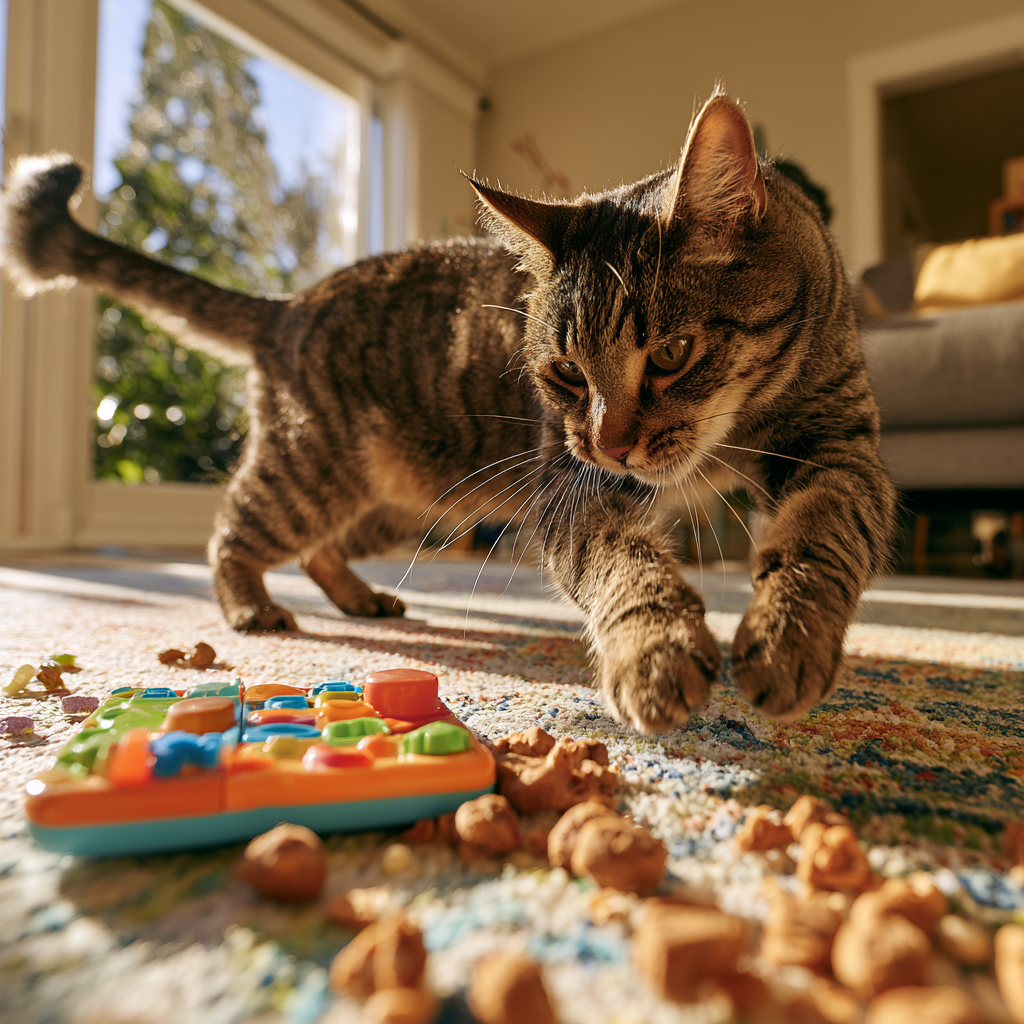
- Monitor reactions: Pay attention to which toys spark excitement—dancing paws, excited tail twitching, and pouncing are good signs of engagement.
- Experiment: Try different types of toys and play styles to see what captivates your cat’s attention the most—some may prefer soft toys, while others enjoy active play.
- Adapt play styles: Observe how your cat interacts during play; adjust your approach based on their responses, offering more encouragement or introducing variations.
Taking time to understand your cat’s preferences will enhance your bonding experiences and their overall happiness.
Adapting toys for different cat personalities
Every cat has a unique personality that affects their play preferences. Adapting toys to suit their temperament can promote enriched experiences:
- For energetic cats: Provide fast-moving toys like feather wands or laser pointers to encourage their high activity levels.
- For shy cats: Choose soft, quiet toys and interactive puzzles to ease them into play without overwhelming them.
- For curious explorers: Opt for toys that challenge their intellect, such as treat-dispensing puzzles that require investigation and problem-solving.
Understanding and catering to your cat’s unique personality traits will ensure their playtime is engaging and enjoyable, meeting their needs for mental stimulation.
Frequently Asked Questions
What are the best toys for mentally stimulating cats?
The best toys for mentally stimulating cats include interactive toys such as puzzle feeders, automated laser pointers, and electronic mice. These encourage engagement and satisfy their instincts to hunt and explore.
How do I keep my cat entertained indoors?
To keep your cat entertained indoors, provide a variety of toys, play interactive games, and set up engaging play zones. Regularly rotating toys and incorporating DIY enrichment activities can also promote sustained interest.
Are puzzle toys good for cats?
Yes, puzzle toys are excellent for cats as they challenge them mentally and help develop problem-solving skills. These toys encourage natural foraging behavior, keeping them engaged and entertained.
What games can I play with my cat?
You can play games like hide and seek, chase the string, and interactive laser games with your cat. These activities mimic hunting behaviors and provide both mental and physical stimulation.
How often should I change my cat’s toys?
It’s beneficial to change your cat’s toys every week or bi-weekly. Rotating their toys helps maintain excitement and novelty in their playtime, preventing boredom.
What are signs my cat is bored?
Signs that your cat is bored include destructive behavior, excessive vocalization, withdrawal from interaction, disinterest in toys, and changes in appetite or grooming habits. Observing these signs can help you provide needed stimulation.
Can all cats play with interactive toys?
Most cats can enjoy interactive toys, but preferences may vary. It’s important to assess your cat’s personality and introduce toys gradually, observing their reactions to ensure a positive experience.
How can I engage an anxious cat?
To engage an anxious cat, use calm and gentle approaches, introducing toys slowly. Opt for quiet, soft toys and interactive puzzles while creating a secure environment to encourage exploration without overwhelming them.